
Pleasure Power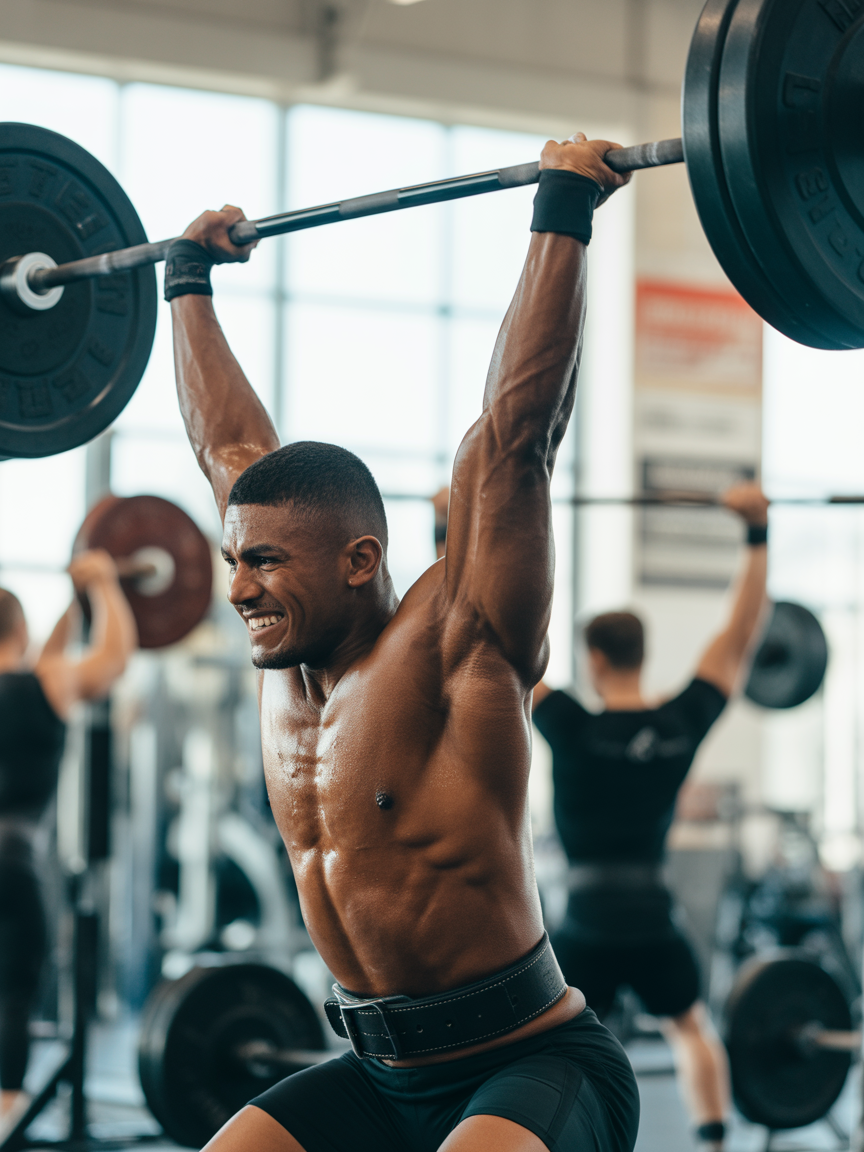
What motivates you? Money? Status? Safety? Power?
You might be forgetting one of the greatest motivators of all: PLEASURE! Everyone loves pleasure.
What you might not know is you can actually use pleasure as a success tool. It helps you face problems, make great decisions and work harder than ever. This works for everyone—even the smallest organisms.
How to Use Pleasure to Succeed
“The reward of an organism engaging upon survival activity is pleasure.”
“The penalty of an organism failing to engage upon survival activity, or engaging in nonsurvival activity, is pain.” – L. Ron Hubbard
Survival means living, thriving, creating and succeeding. When your activities improve life for yourself and others, they give you pleasure.
Nonsurvival activities block or ruin life. They harm you or others, and they bring pain.
The Four Types of Activities
You can sort everything you do into these four categories.
1. Short-term Pleasure, Long-term Pleasure (The Best of Life)
These are the best activities in life. They feel good now and keep rewarding you later.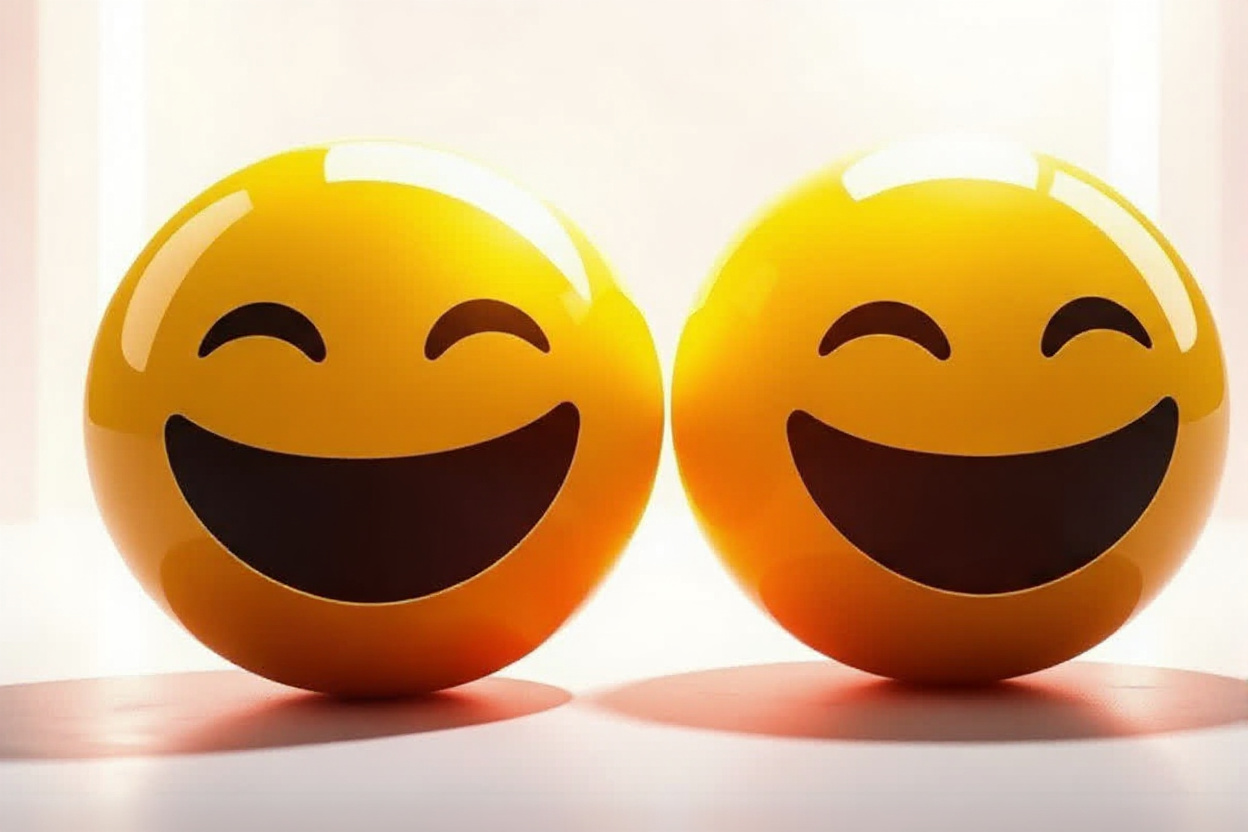
Examples
- You build a loving relationship which is a joy from your first dates and lasts to your retirement together.
- You enjoy learning new skills that bring you a lifetime of joy and money.
- You exercise with a friend — it’s fun right away and you keep it up for years.
- You have fun playing chess with your daughter and then continue to enjoy the game online after she grows up.
- You have fun planting a garden of vegetables, and later you enjoy fresh vegetables that taste incredible.
- You help someone in need and immediately feel good — and you also build trust and lifelong friendships.
- You love building robots, so you teach kids the skill, which is fun, and then you get lasting pride when you see them succeed.
- You learn to write by reading and enjoying the best books ever published. You then create a writing career.
- You have fun upgrading your home which makes it more enjoyable to live in. You also get rewarded when you sell it.
- You start the small business of your dreams and enjoy every step. It is even more fun to run it when the profits and satisfaction roll in.
2. Short-term Pain, Long-term Pleasure (The Path to Success)
Temporary discomfort can actually produce lasting happiness, strength and success. You can endure far more than you think—and it’s worth it.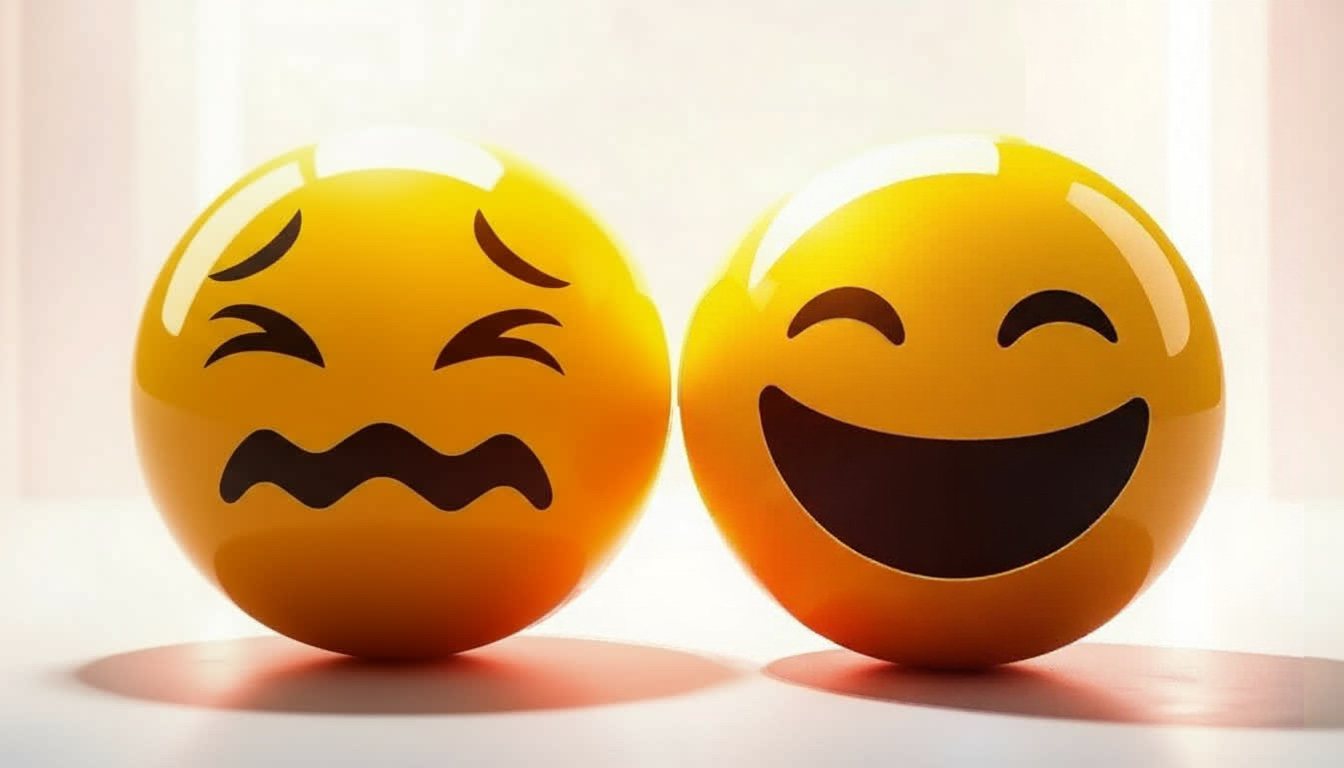
“Man will endure a lot of pain to obtain a little pleasure.” – L. Ron Hubbard
Examples
- You push yourself to exercise when you’d rather rest, and soon you’re healthier, stronger and happier.
- You practice public speaking even though it terrifies you, and later lead with confidence and respect.
- You quit sugar, alcohol, or cigarettes and suffer for weeks, but then you wake up clear-headed and full of energy.
- You learn to apologize and repair relationships—it’s painful at first, but it builds trust and peace.
- You tackle a difficult project at work, and it leads to new skills, promotions, and pride in your accomplishments.
- You spend weekends reading investment books, which is tedious. But ten years later you have real financial independence.
- You face a big fear despite the mental pain it causes, but you lose your fear and enjoy freedom and happiness.
- You endure rejection and failure while starting a business, but eventually it thrives and fulfills your dreams.
- You teach your children discipline even when they torture you with drama, and years later they thank you for it.
- You dedicate time each week to boring community service, but it gives you pride.
“The Stanford Marshmallow Test” is a great example of how delayed gratification, even though painful, pays off the best.
3. Short-term Pleasure, Long-term Pain (Life's Traps)
These are traps. You think the activities are good for you, but they end up ruining your life.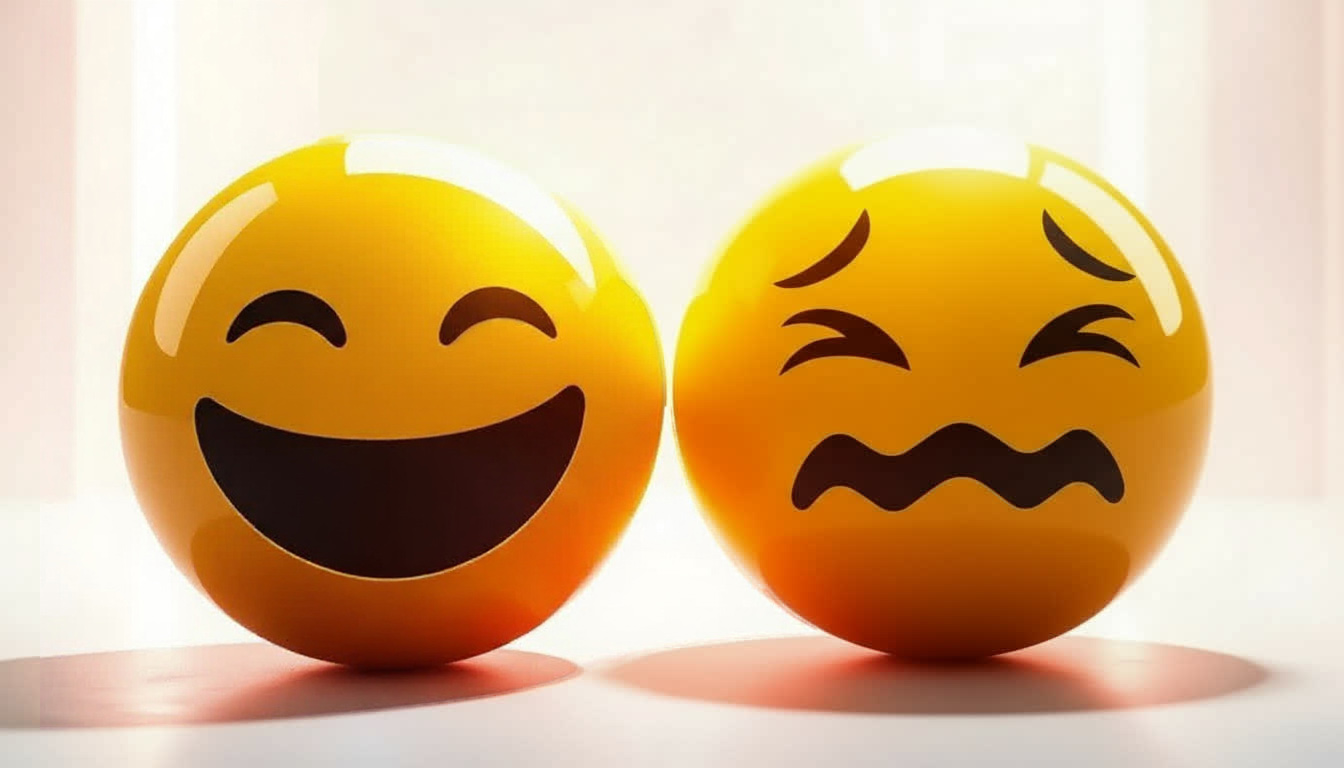
Examples
- You enjoy a beautiful wedding, but your new spouse quickly turns into a slob who constantly makes you angry.
- You waste hours each day consuming bad news.
- You devote your day to social media in hopes of getting a spark of joy. Afterwards, you feel unhappier than before you started and have nothing to show for your time, except fresh pain.
- You smoke to calm your nerves, but soon you can’t relax without it and your health declines.
- You flirt with someone outside your relationship for excitement, but destroy the trust you once had.
- You splurge on a vacation you can’t afford, and spend months stressed about the debt.
- You skip your workout to “treat yourself,” but feel sluggish and guilty all day.
- You use alcohol or drugs to escape your problems, but the problems grow bigger.
- You lie to avoid trouble, but the lie later costs you your reputation.
- You procrastinate a task to enjoy a break, but end up with more stress and lost sleep.
4. Short-term Pain, Long-term Pain (The Worst of Life)
These are the most nonsurvival things you can do.
Examples
- Working at a bad job under horrible conditions, with toxic people, with no proof it will ever improve.
- Using alcohol, drugs, or food to dull emotional pain, and waking up with pain you then need to dull again.
- Constantly criticizing yourself is always painful and never helps you improve.
- Holding a grudge that hurts you every time you think about it, and never, ever forgiving the bad guy.
- Staying in a relationship filled with anger, criticism or abuse.
- Letting your home or environment get dirty and cluttered which makes you depressed, yet you just add to the mess.
- Ignoring your goals year after year, while telling yourself you’ll start “someday.”
- Sharing your victim stories which makes you and your listeners feel worse.
- Giving up on your dreams and pretending they never mattered.
- Neglecting your health, even when you are suffering, until you die.
Exercise
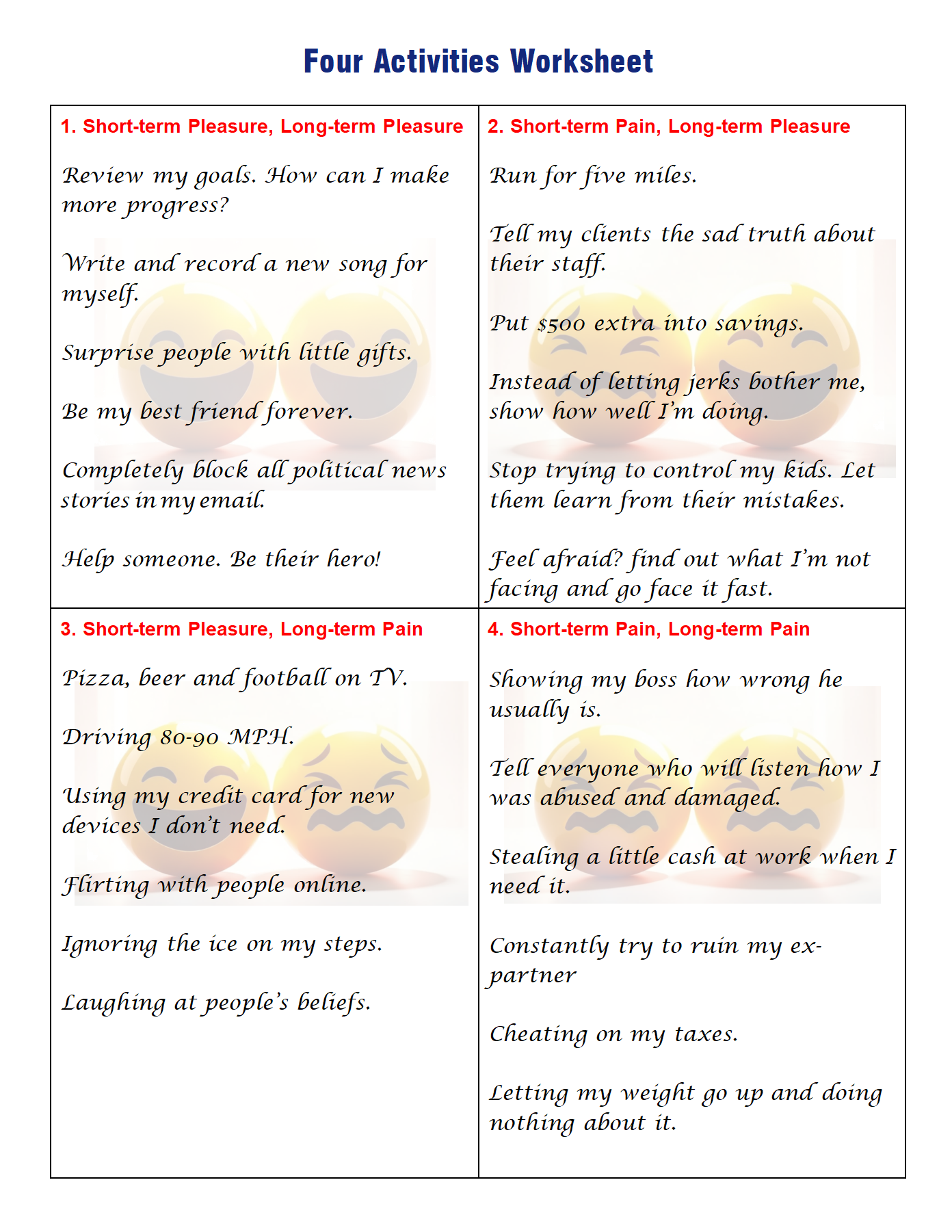
1. Create a page with four lists (or sections or rows). Click the worksheet example to enlarge it.
Put these labels at the top of the lists:
- Short-term Pleasure, Long-term Pleasure
- Short-term Pain, Long-term Pleasure
- Short-term Pleasure, Long-term Pain
- Short-term Pain, Long-term Pain
2. Enter each of your activities into one of these four lists.
3. Use the 1st and 2nd lists to help eliminate the activities in the 3rd and 4th lists.
4. Constantly look for new activities you can add to your 1st and 2nd lists. Make these activities part of your life from now on.
If you do this step every time you spot a new way to increase your pleasure, you’ll soon have dozens!
Click here for a blank worksheet.
Five Ways to Use Pleasure as a Success Tool
“The ability to arrange life and the environment so that living can be better enjoyed is important.” – L. Ron Hubbard
1. Use Pleasure to Help You with Complicated Tasks
For example, you have some financial paperwork, legal documents or group planning to work on, but it’s confusing. Normally, you might give up or go watch TV with some wine. But instead, you look at your first list and decide to take a quick jog around the block, or use one of your other sources of pleasure. You feel better and think more clearly. Your complicated task becomes simple.
2. Use Pleasure to Help You Prepare
Before you face a tough situation, like a big meeting, a stressful speech or a difficult task, spend a minute on something from your first list that quickly uplifts you, like share a joke with your friend, stretch out your limbs or feed your pets. You’ll be calmer and more confident as you prepare.
3. Reduce Your Stress
Simply pick and do one of your pleasurable activities from your first list until your stress vanishes. For example, your neighbor keeps you awake with his loud music. Instead of lying in bed with anger, you look at your list and remember how much you like soft classical music with your noise-cancelling headphones. Or maybe your list includes your neighbor’s type of music, so you bounce your head a bit until you feel at peace.
4. Boost Your Mood When You Need It
Thanks to your first list, you can pause whatever you’re doing, quickly boost your mood, and then resume what you need to do. For example, you still feel sad about your dog dying a few weeks ago. You go through your list and pick a few activities from the first two lists. Maybe you clean your bathroom to a new level of cleanliness. Or you work on your helicopter flying lessons. Or you take the next step to starting your new business. Within hours, you no longer feel sad, but feel happy again.
5. Replace Bad Habits with Good Pleasures
Every harmful habit can be replaced by a good pleasure. You overwhelm the bad habit’s urge with your natural joy.
- Instead of overeating, enjoy preparing a complicated recipe for some delicious health food.
- Instead of having a beer, take your kids to the park and play soccer.
- Instead of criticizing yourself, make two other people proud of themselves.
Roger Uses Pleasure to Handle His Gambling Addiction
Roger is addicted to gambling.
All day long he thinks about the thrill of winning and how much money he could make. But in reality, he’s deep in debt and it’s ruining his life. Out of desperation, he’s even sold some of his wife’s jewelry.
One day he reads this article and gets a new idea.
“I’ve tried everything else,” he thinks. “Maybe I can use pleasure itself to handle my urge to gamble.”
So Roger does the exercise and adds a dozen pleasurable life activities to his list. Then he replaces this harmful pleasure with better ones.
First, he decides to like himself again. It’s one of the top items in his first list.
He pats himself on the back and says, “Even though I have a gambling problem, I’m still a decent guy. I’m not the loser everyone says I am.”
That little bit of self-respect gives him a surprising feeling of relief.
Next, he forgives himself.
“Yeah, getting into gambling was a bad idea,” he admits, “but at the time, it felt exciting. I just wanted that rush. I can do better now.”
Forgiving himself removes a heavy weight of guilt. He feels lighter—and freer to change.
Finally, Roger decides to replace his destructive pleasure with a one of his creative pleasures. He’s always loved fixing up old cars, so he cleans out his garage and brings in an old 25-year-old Porsche to restore.
Now, whenever he feels the urge to gamble, he pats himself on the back, forgives himself for his bad habit and works on the Porsche.
After a few weeks, his cravings are gone. The pleasure of creating something real has replaced the fake excitement of gambling.
He pays off his debts, buys his wife replacement jewelry and enjoys his healing marriage
Roger feels proud of himself.
Sierra Escapes the Social Media Trap
Sierra is nineteen and spends hours every day scrolling through social media: Instagram, TikTok, Snapchat, etc.
She tells herself it helps her “stay connected,” but deep down, she knows it’s an addiction. Every night she goes to bed feeling drained, unmotivated and jealous of everyone else’s perfect lives.
One afternoon she clicks on this article. The idea catches her attention: “Use pleasure itself to succeed.” She decides to try the exercise.
When she lists her activities, her first two lists “Short-term Pleasure, Long-term Pleasure” and “2. Short-term Pain, Long-term Pleasure” are almost empty. Her two pain lists are filled with teenage drama based on her social media accounts.
This realization hits hard.
So Sierra adds new activities to her first two lists that bring real, lasting happiness: painting, hiking with friends, learning guitar, even helping her mom with meals.
The next morning, instead of reaching for her phone, she paints for fifteen minutes.
It feels surprisingly good.
Soon, she starts posting her artwork instead of selfies—and people love it. Her followers grow, but this time she feels proud instead of empty.
After a month, Sierra realizes she’s not addicted anymore.
Her new pleasures give her more energy, confidence, and joy than social media ever did.
She no longer scrolls through other people’s lives—she’s too busy enjoying her own.
John Replaces His Ego with Real Pleasure
John is a wealthy executive. Smart, driven, and proud—but impossible to work for.
He loves winning arguments, proving people wrong and holding grudges against anyone who challenges him. It feels good in the moment.
But over time, his “wins” start costing him.
His best staff members quit. His meetings are tense. His company’s growth slows down.
Late one night, frustrated and alone in his big office, John finds this article. He reads how the reward of survival activity is pleasure.
It hits him. His kind of pleasure isn’t survival—it’s destruction.
He decides to try the exercise.
John fills the third and fourth lists fast: arguing, revenge, gossip, pride. Then he struggles to fill the first two lists.
After some thought, he adds: training future executives, carefully listening to ideas from his team, showing appreciation for excellent work and staying calm despite disrespect.
The next day, he calls his managers into a meeting—not to scold, but to communicate.
It feels awkward at first, but strangely satisfying.
He praises one employee who’d almost quit. The gratitude on her face gives him a feeling no argument ever did.
Week by week, John replaces ego with positive action. He thanks people more. He lets go of grudges.
Months later, his team is happier, his business is growing again—and for the first time in years, so is his joy.
John realizes the pleasure of helping others succeed is far greater than the pleasure of being right.
12 Benefits of Using Pleasure to Succeed
1. You feel happier because you fill your life with beneficial activities.
2. You stop chasing fake pleasures that drain your time, energy and self-respect.
3. You learn to enjoy tough activities that increase your production and income.
4. You recover faster from mistakes because you replace pain from regret and guilt with productive action.
5. You naturally increase your energy and motivation by doing what strengthens you.
6. You eliminate your harmful habits, large and small, by replacing them with satisfying, life-building pleasures.
7. You reduce stress by organizing your life around activities that produce real satisfaction.
8. You make better decisions because you can clearly see which actions lead to long-term gratification.
9. You improve your relationships by seeking long-term benefits that are good for you and others.
10. You work harder and smarter because your daily actions feel rewarding instead of draining.
11. You build a stronger sense of purpose—each pleasure connects to something meaningful.
12. You create a balanced, successful life that feels good now and stays good for the long term.
Final Thought
Pleasure is now your secret weapon for success.
Work with your lists from the exercise and enjoy yourself (and your new level of success)!
Read “The Way to Happiness” by L. Ron Hubbard for a complete booklet of pleasure tips.