10 Fearless Habits
Fear is a giant barrier to success. It makes you hesitate, doubt yourself and avoid opportunities. It ruins your dreams of success.
Fear shows up as nervousness, stress, worry, shyness, terror or avoidance.
But fear isn’t who you are—it’s just some bad habits.
Replace them with Fearless Habits, one at a time, and fear loses its power.
The Fear Virus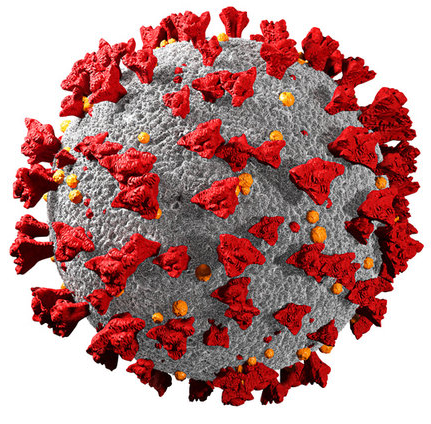
Fear is like a virus. It is contagious, unhealthy and destructive. You can catch a fear at any time from a disturbing news headline, an unfriendly person, an imaginary danger and other sources.
Once you are infected by fear, you pull back. You avoid the best parts of life to stay inside your comfort zone. You are not very successful or happy.
Fear does not disappear by thinking positively or waiting it out. Fear stays in place because it is held there by bad habits.
Even worse, fear grows over time and slowly takes more, and more, control of your decisions and happiness.
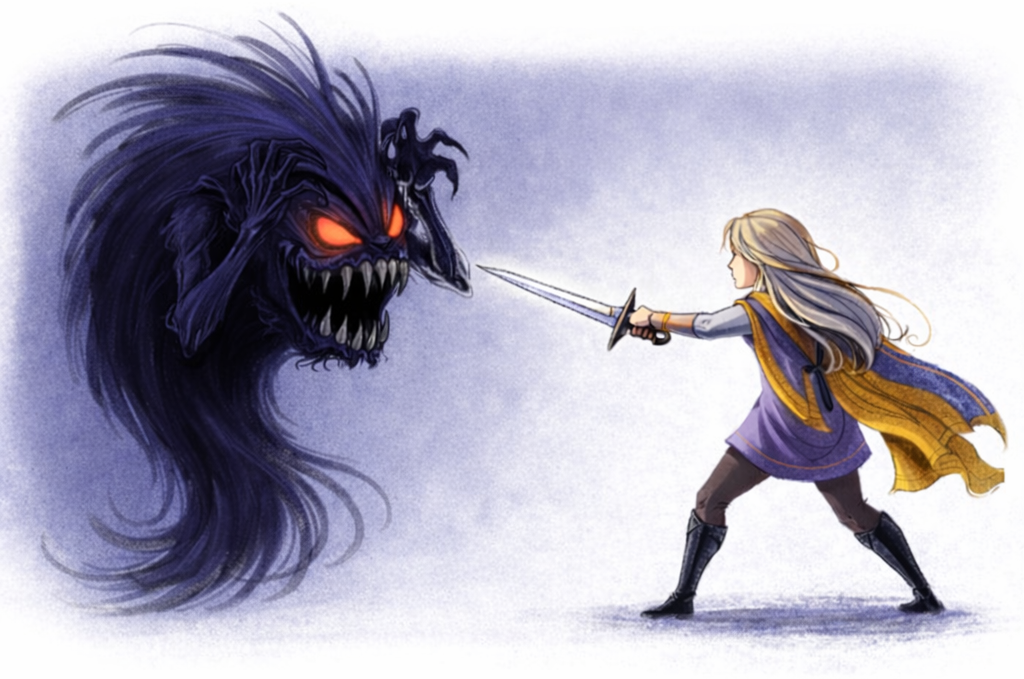 Fear survives because of the 10 bad habits below. If you replace these fear habits with Fearless Habits, the virus stops and you feel great!
- Pick one of the Fearless Habits below and use it to handle one of your fears. If it doesn’t reduce the fear, try another Fearless Habit. Take your time.
- Once a Fearless Habit works for you, use it each time you feel afraid or shy. Use fear itself as a trigger to use this Fearless Habit. For example you think, “I’m feeling nervous about this meeting. Ah, that’s my trigger to use the ‘Get Prepared Habit'” and your fear vanishes.
- Add more Fearless Habits for more fears. Use all 10, as needed, until fear no longer stops or controls you.
New Option: Try our Fearless Systems for Fear of Failure or Fear of Bullies. Just answer a few questions to get a plan created just for you.
New Fearless System
Do you have a Fear of Failure or a Fear of Bullies? Answer a few questions to get a personalized action plan to help handle that fear.
No registration. No fee. No ads. Help is only one click away.
Habit #1: See Yourself as Fearless
Fear Habit: Believing you are a fearful person is a bad habit.
Fearless Habit: BECOME a fearless person and act from that identity.
Click for Details
- Do you hesitate before speaking?
- Do you take too long to make decisions?
- Are secretly afraid every day?
When you believe you are a “fearful person,” you act in ways that match that identity.
For example, you avoid all risks. You talk yourself out of taking action. Fear blocks your success.
Now imagine the opposite. See yourself as a “fearless person.” You change your mind about who you are, even if it feels like you are pretending, at first.
You are not reckless or aggressive. Just someone who is becoming braver.
Three Bad Habits
- Telling yourself, “I’m anxious,” “I’m shy,” or “I’m not confident.”
- Waiting for perfect conditions before acting.
- Using past mistakes as proof you should avoid risk.
One Good Habit

Decide you are a fearless person. BE fearless. Then take action from that identity, even when fear is present.
When you are BEing fearless, you stand a little straighter. You look at people in the eye more often. You DO fearless things.
For example, you need to ask someone an important question, but are afraid of how this person might reply. Normally, you wait and just think of how badly it might go. But now, instead, you use this good habit and you say, “A fearless person simply asks this question.” You then ask.
Because you are bold and fearless, you are ready for anything.
Try It Yourself (1-3 Minutes)
- Write this sentence on paper: “I am a fearless person.”
- Now write a few small things you, as a fearless person, would do in the next few minutes. Don’t think, just write.
- Then immediately take a small action that a fearless person would do.
Congratulations! You acted without fear. You are building a powerful habit. You are BEING fearless.
If DOING fearless things becomes difficult, BE even MORE fearless. In your mind, be bigger, bolder and more courageous.
You will then act more and more fearless, day after day.
Three Action Steps to Start this Habit
- Say to yourself, “I am fearless” out loud once each morning. Say it again several times during the day. “I am fearless.”
- When fear appears, ask yourself, “What would a fearless person do?” Then do your best to act that way. If you can’t, repeat step 1 and BE MORE fearless.
- Do these two steps again and again to form this new habit. Be happy with small daily wins. Persist until you have built this new Fearless Habit.
Read more about Be, Do Have: “How to BE a Success“
Habit #2: Replace Fear with Joy
Fear Habit: You escape fear with alcohol, junk food, shopping or other quick fixes that create long-term pain.
Fearless Habit: Use long-term beneficial pleasure, like connecting, exercising, creating and so on, to conquer fear.
Click for Details
At one time or another, everyone has tried to remove fear with junk food, drugs, alcohol and hours in front of screens. For a short time, the fear fades. But afterward, the fear is still there—often stronger—and now it’s joined by guilt, health problems, lost money, lost time, stress or regret.
When you use healthy pleasure to handle fear, it loses its grip. You feel calmer, clearer, and more willing to act. Life becomes lighter. Decisions become easier. You regain control.
Listen to a short discussion about this Fearless Habit:

Three Bad Habits
- Using unhealthy habits to numb fear.
- Staying home and hiding from life.
- Avoiding action and hoping fear will fade on its own.
Habits like these do nothing to handle fear, and can actually increase your fear.
One Good Habit
Replace fear with beneficial pleasure—activities that improve your life, build strength and create real satisfaction.
This works because all pleasure is not the enemy. Harmful pleasure is. When your actions improve life for yourself or others, they naturally produce joy and confidence. That joy pushes fear out without creating future pain.
For example, you feel anxious and stressed at night. Normally, you snack, drink, or watch videos until you fall asleep. Instead, you stretch your body, clean something or work on a meaningful project. Within minutes, your mood shifts. Fear fades. You feel better—and tomorrow is easier.
Try It Yourself (1–3 Minutes)
- List a few activities that give you pleasure AND improve your life. Examples:
- Build and improve loving relationships.
- Learn new skills.
- Earn more money.
- Exercise.
- Teach kids and adults.
- Enjoy new experiences with your family.
- Upgrade your property and possessions.
- Start the small business of your dreams.
- Discover and enjoy a healthy diet.
- Donate time and money to good causes.
- Next, pick a fear you feel right now. Pick a positive pleasure activity from your list to handle this fear. Now go do the activity right now.
- If the fear is still there, pick another pleasure that improves your life. Repeat until the fear is reduced.
Notice how fear weakens when joy comes from the right source?
Three Action Steps to Start This Habit
- Create a complete list of positive actions that give you pleasure. Keep the list instantly available to you. Add new ones when you think of them.
- When fear appears, replace it immediately with a healthy pleasure from your list. Repeat until the fear goes away.
- Practice this daily until it’s a habit. Each time you do this, fear loses power and joy becomes a Fearless Habit.
Read “Pleasure Power from Joyful Pursuit” to use pleasure as a life success tool.
Habit #3: Get the Facts
Fear Habit: Believe scary news, rumors and myths without checking.
Fearless Habit: Do your own research as true facts reduce or remove fear.
Click for Details
 You wake up feeling fine. Then you check the news.
- A scary headline.
- A shocking warning.
- A story about what might happen next.
Suddenly you feel worried, even though nothing in your real life has changed.
Why?
- Fear gets attention.
- Fear gets clicks.
- Fear sells advertising.
Calm, factual information does not.
News stories are written to sound urgent and disturbing. Their goal is simple: control your time and attention so you buy from their advertisers. So if you believe these headlines are facts, you accept their message: “The world is dangerous. I must stay informed to stay safe.”
Now imagine this instead.
- You read or hear a frightening headline — but you pause.
- You read the details and check the facts. You get real numbers, original sources and calm explanations.
- Your fear fades or disappears.
That’s the power of facts.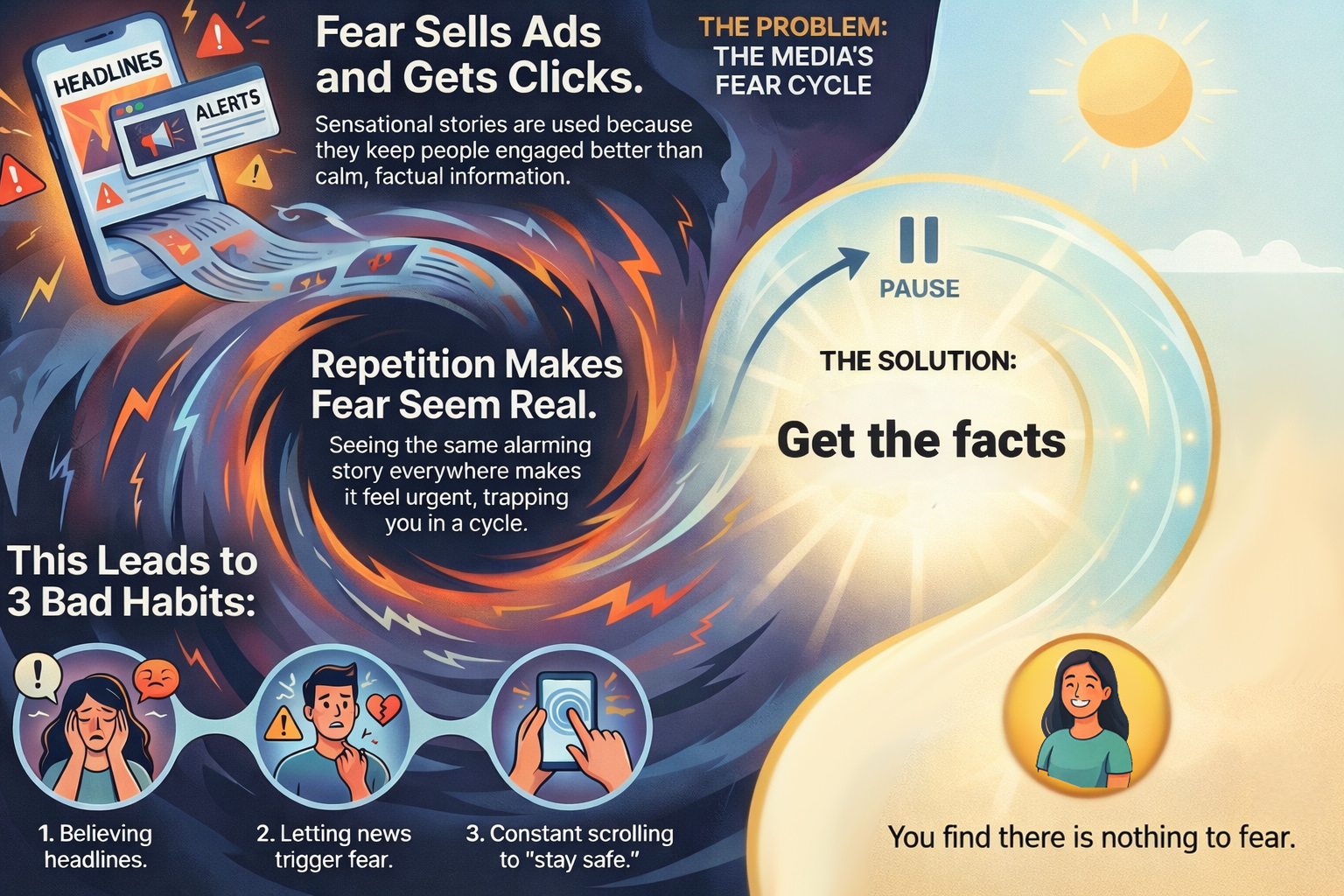
Three Bad Fear Habits
- Believing disturbing headlines without checking the facts.
- Scrolling from one bad story to the next as your fear builds.
- Thinking you must keep consuming the news to protect yourself.
One Good Fearless Habit
Get the facts before accepting any headline that scares you.
You will discover the situation is far less extreme, or has nothing to do with you.
Your fear drops. You think clearly again. You feel fearless.
Prove it to Yourself (5-Minute Exercise)
- Write down one headline that bothered you.
- Now get the facts. Write down what you personally know is true and then do some research to get the rest.
- In nearly all cases, you will find out there is nothing to fear.
After you discover how headlines are used to disturb you and make you read their stories, you may realize you don’t even need to read headlines or get the facts. You just ignore or block them.
Action Recommendations
- Never accept headlines as facts.
If they disturb you or you believe them, get the facts.
Once you realize most headlines are mostly opinion, you feel fearless. - Take this fearless habit to the next level. Become even more fearless by ignoring all news for 24 hours.
No headlines. No scrolling. No updates. - Spend these 24 hours doing anything else.
Read something enjoyable. Go outside and notice how safe it is. Have some fun! - Notice what happens to your fear.
Forming this fearless habit is not easy. Fear-based news is pushed everywhere — phones, apps, social feeds, TV, radio. Repetition makes them feel true.
Getting the facts solves this fear. Ignoring or blocking the news, as a permanent habit, works even better.
You live a calmer, clearer and more fearless life.
Read: “How to Reduce Anxiety.”
Habit #4: Take Tiny Steps
Fear Habit: Avoid all big fears. Make excuses and do nothing.
Fearless Habit: Take small easy steps to face a fear. Your fear slowly weakens and you get stronger.
Click for Details
Like most people, you avoid things that scare you. You put them off until later. At first, the fear feels quieter, but nothing actually changes.
The problem stays. The fear grows. Progress stops.
Fear does not disappear if you wait. Fear disappears with actions, even small actions. You make progress and feel a little more fearless.
The actions steps do not need to be big and dramatic or risky. Just one small move forward.
Three Bad Habits
- Avoiding fears with good excuses.
- Waiting to feel motivated first.
- Doing nothing and hoping fear fades on its own.
One Good Habit

Take one small fearless step every day, even while fear is present. Even tiny steps are progress.
For example, you are terrified of dental work. You would rather lose your teeth than go to a dentist.
So today, you take one tiny step and look at your dentist’s website home page.
The next day, you read a several pages of the website. You pat yourself on the back.
It might take a few weeks, but you are overcoming a major fear.
You then call the dental office and ask questions. You schedule an appointment then cancel it. You walk by the dental office. You watch YouTube videos. You call and ask for a tour or to just meet the dentist.
Eventually, you tell them about your fear and they help you have a painless visit.
You keep your teeth!
Try It Yourself (1–3 Minutes)
 Think of one thing you’ve been avoiding.
- Ask yourself: “What’s a small step that still counts as progress?”
- Make the step so easy it feels almost silly.
- Do that step right now.
- Notice how you feel.
Three Action Steps to Start This Habit
- Pick one fear and commit to one tiny step per day.
- Shrink the size of the step until you are willing to do it.
- Repeat daily.
Whenever you avoid something out of fear, stop, Pick one tiny step and take it.
Learn more about breaking down fears into tiny pars, read “Why Life Gets Complicated.”
Habit #5: Check for Enemies
Fear Habit: Someone makes you feel afraid . . . and you let them.
Fearless Habit: When someone deliberately makes you feel afraid, you either handle them or disconnect from them.
Click for Details
Do you know anyone who stirs up your fear?
Such a person might use disturbing news, potential risks, criticism, intimidation, guilt, humiliation or constant negativity to control you. They exaggerate dangers. They question your ability to handle your work or your life.
And then without realizing it, you believe them and feel afraid. This is a bad habit.
When this happens over and over, fear becomes part of your life. You doubt yourself. You hesitate. You feel insignificant. Someone is actively pushing fear into your life.
The good news is this: you can and should disagree with the source of this fear.
When you handle him or her correctly, the fear weakens fast. You feel steadier, clearer and happier. You stop feeling fear and take back your life.
If you do not face and handle this person, your fear grows.
Three Bad Habits
- Letting someone repeatedly scare, threaten or intimidate you.
- Explaining away their bad behavior by saying, “That’s just how they are.”
- Staying connected to people who benefit from your fear.
One Good Habit
Check for enemies. When you find someone who deliberately makes you feel afraid, either handle them directly or disconnect from them.
When you handle them, they stop their negative chatter. They stop making you feel afraid. You move on with a positive relationship.
However, if you can’t handle them, you disconnect. You can gently and gradually disconnect, if needed. Just starting the process will give you relief.
This works because all fear has a source. When the source is removed or neutralized fear loses its fuel. You regain emotional control and personal power.
 Example: Your Boss, The Jerk
 Example: Your Boss, The Jerk
For example, you have a new boss who uses criticism and threats to control you with fear.
“You’re just new not stupid, right?” “If you don’t meet your quota, I hear McDonald’s is hiring.” “My ten-year-old could do a better job.”
You are afraid to talk to him, so you spend two hours preparing to handle him. When you calmly confront him with facts and tell him to stop, he may respect you and leave you alone.
If he doesn’t, you get another boss. You don’t “get used to it” or say, “I’m just here for the money.” Why live in fear?
Example: Your “Friend”
As another example, a “friend” constantly shares alarming stories and negative predictions. “I don’t know, the world seems to be falling apart.” “Maybe those conspiracy theories are true.” “I’m pretty scared. I can tell you are too.”
When you realize what she’s doing, you stop listening to her disturbing communications, reduce your time with her and eventually disconnect completely.
Your mood improves and stabilizes. You feel fearless!
Fear thrives when it is unchallenged. When you identify and stop fear-pushers from influencing you, you reclaim your confidence and your freedom to move forward.
Learn more with “Your Worst Enemies.”
Habit #6: Get Prepared
Fear Habit: Avoid the fear, stay unprepared to handle it and hope it goes away.
Fearless Habit: Prepare to handle everything that might happen.
Click for Details
Everything is fine until something bad happens. An email. A call. An accident. A betrayal. A loss.
Most people worry about them without preparing for them. So when bad things happen, they panic. They blame others. They stay afraid of them.
Preparation is a Fearless Habit that protects you and reduces your fear as you are ready. Your imagination shifts from fearful future events to cheerful future events.
Three Bad Habits
- Worrying about disasters without preparing for them.
- Avoiding important parts of life for fear of bad results.
- Overreacting when something unexpected occurs.
One Good Habit
Predict what could go wrong and prepare for it.
As a result, your fears become controllable events instead of terrifying you.
 For example, you are afraid of flying. You use this Fearless Habit and get prepared.
- You learn how turbulence works.
- You get the statistics and watch videos about flying risks.
- You talk to people who fly all the time to see how they handled their fear.
- You reserve the best seat on the flight.
- You plan out your activities for the flight, such as a movie, a book or some work.
- You charge up your devices and load the files you’ll need.
- You make a checklist of things to do if you feel afraid during the flight.
Suddenly, you are not worried. You are ready!
When you are prepared for everything bad that might happen, you feel safer. In fact, when you have no fear of a disaster, it may never actually happen.
Prove it to Yourself (3-5 Minutes)
- Write down something you worry might happen to you.
- Ask yourself, “How can I prepare for this?”
- Write down your preparation steps until you feel less fear.
When you write things down, organize your thoughts and plan responses in advance, the unknown elements disappear. You see yourself taking orderly, fearless action.
Take Action
- Make a list of all the catastrophes you expect may happen to you. Include everything that makes you worry. Small things, big things, anything you can think of.
- Next to each item on your list, write a plan to prepare for it or even prevent it. What can you do now to be ready for the catastrophe? Some potential catastrophes require a single preparation step while others need a detailed, 20-step plan.
- In a third column, write what you will do if the catastrophe actually happens. How will you handle it?
Preparation turns fear into confidence. Best of all, you can do it anytime, anywhere, for anything, in minutes.
Read more examples and tips for this Fearless Habit at “How to Protect Yourself From Catastrophes.”
Habit #7: See the Rightness
Fear Habit: Look only for what is wrong and amplify the negativity.
Fearless Habit: Find what’s right about the situation and build on those positives to overwhelm the fear.
Click for Details
When fear takes over, your mind focuses on what’s wrong?
You spot worries everywhere. You magnify problems until they feel permanent. You constantly ask yourself, “Why am I so fearful?” or “What’s wrong with me?”
The more you stare at what’s wrong, the heavier life feels—and the harder it becomes to act. This bad habit can not only ruin your confidence, it hurts your motivation, relationships and income.
Of course, everyone believes that removing a fear means you have to fix something. But focusing on things that are wrong drains energy and creates MORE fear.
The good news is you can easily break this bad habit by focusing on what is right. When you do this, fear loses its grip. You feel lighter. You gain the strength to solve them.
Three Bad Habits
- Constantly asking, “What’s wrong?”
- Digging into your fears to find flaws and threats.
- Dwelling on mistakes as your confidence collapses.
One Good Habit
Find what’s right about the situation, then build on the positives until fear fades.
Let’s say you are afraid of having no money and can’t even afford good food. If you focus on wrongness, you think, “Why am I failing? Why can’t I make more money? Why do my friends have money while I can’t pay my bills?” Your fear grows.
But if you form a new habit and look for rightness, you see the world with fearless eyes. You look at the positives. Examples:
- You have valuable skills.
- You are healthy and can persist.
- You know how to make people feel comfortable.
Your confidence rises as your fear drops away.
Prove it to Yourself (1–3 Minutes)
- Pick one area causing fear.
- Write down at least three things that are right about it. Keep going until you feel a boost in your mood.
- If the fear returns, stop and list more “rightnesses.”
Take Action
- Start with a fear you wish to handle.
- List everything you can think of that is right about that area.
- Keep listing these rightnesses until your mood improves and your fear starts to fade away.
- Each time you feel the fear come back, make a new habit to ask yourself, “OK, I feel fear. So what is right about this situation?”
- Keep looking or write them down until the fear is no longer in your way.
Read “What’s Wrong with Me?” for more details, examples and action steps.
Habit #8: Control What You Can, Leave the Rest Uncontrolled
Fear Habit: Try to control everything, including things no one can control.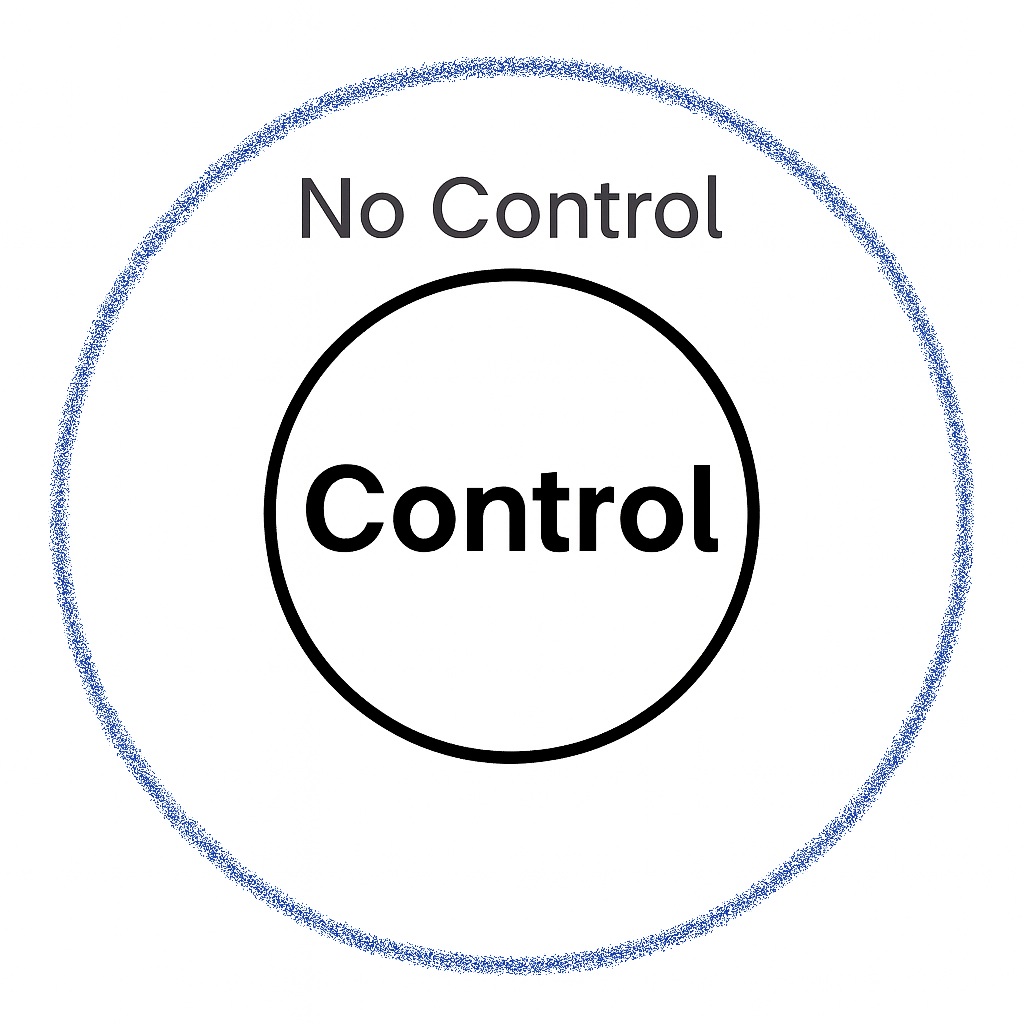
Fearless Habit: Deal only with the parts you can control or influence, not what you don’t control.
Click for Details
The Four Circles of Control is a powerful tool for reducing fear. You take apart the scary situation, put each part into the correct circle, and then act according to that circle.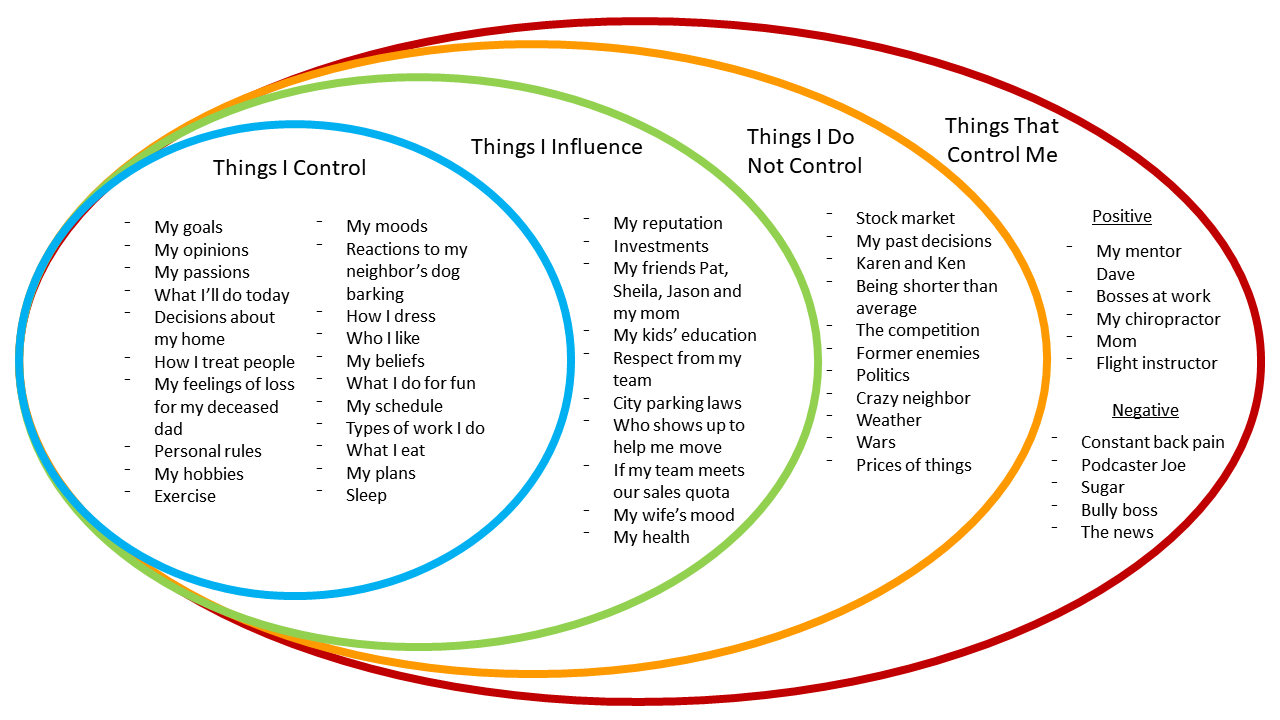
Circle 1: Things You Can Control
You control some parts of a fearful situation.
For example, you are afraid someone might break into your house, so you lock your doors, improve the lighting or install better security and you feel safer.
Or you are afraid of driving in city traffic, so you practice at 7 AM on Sunday mornings when traffic is light. As you gain experience, you reduce your fear.
When you focus your attention on the present, memories of scary moments from the past and imagined dangers in the future can have less power over you. Controlling your attention reduces your fear.
Circle 2: Things You Can Influence
While you can’t control certain parts of a fearful situation, you can have an influence on them.
For example, you are afraid of a big loud coworker who gets angry at silly things every day. You can’t control his mood, but you can influence him by being calm, giving him respect or improving his mood.
As another example, you are afraid your sister is drinking too much every night. You tell her why you are concerned and encourage her to try fun activities that are healthy.
Your advice may influence her, but her choices are hers to make.
Circle 3: Things You Should Leave Uncontrolled
Some parts of a fearful situation are outside your control. Knowing this can help you stop wasting time and energy trying to control them. You can then work around them or distance yourself from them.
For example, you are worried you will lose all of your savings in the stock market. Instead of buying and selling stocks all day, you admit you are not a professional investor and actually have zero control over the stock market. So you choose an investment strategy that is right for you and spend your time doing something more productive.
Circle 4: Things You Should Allow to Control You
You may need to let some things control you . . . if they are positive. Examples include driving rules, team strategies and client requirements.
For example, your boss requires everyone to follow an important safety procedure. You may not like the procedure, but you follow it because it protects you and others. It is positive.
A boss has legitimate authority over what work you do, but that does not mean the boss can control your personal life or actively ruin your mood. This is negative control and you should not allow it.
New Fearless Habit
Sort the different parts of your fears into four circles:
- What can I control?
- What can I influence?
- What should I leave uncontrolled?
- What should I allow to control or limit me?
Then put most of your effort into the first two circles.
Try It Yourself — 1–3 Minutes
- Write down one thing that worries or bothers you right now.
- Then break the situation into the Four Circles of Control. A fear may involve all four circles, or only two or three.
- Ask yourself:
- What about this fear can I control?
- What about this fear can I influence?
- What about this fear should I leave uncontrolled?
- What about this situation should I reasonably allow to control or limit me?
- Then act accordingly.
The most important question is: What can I control about my own actions and responses right now?
Learn more from “The Four Circles of Control.”
Habit #9: Take it Apart
Fear Habit: Let a big complicated problem scare you.
Fearless Habit: Take it apart and handle the smaller parts that cause the fear.
Click for Details
If you avoid something because of fear, it gets confusing. Confusion makes your fears feel complicated.
Fortunately, complicated fears are made of small parts that you can face and handle. When you do this, the fear falls apart.
Scary problems stop swirling in your head. You understand them and know what to do. Life is much easier to enjoy.
Three Bad Habits
- Treating the whole problem as one giant scary thing.
- Allowing confusions to get larger and more complicated.
- Believing there is nothing you can do to deal with fearful problems.
One Good Habit

Take the problem apart. Find the exact parts you cannot or will not face. Handle each part individually until the fear is gone.
It’s like repairing a computer. You take it apart, test each part and fix or replace the bad parts.
For example, Jill is afraid of her new coworkers because she feels unpopular. She’s confused and afraid of being left out.
She decides to try this fearless habit and breaks it into small parts. “What about being in this group is hard for me to face?” She writes five things:
- “I’m afraid of saying the wrong things.”
- “I’m afraid people simply dislike me.”
- “I worry I’m ugly.”
- “Maybe my jokes are stupid.”
- “They won’t accept people like me.”
Just making this list makes her feel better.
Next she faces the first one and realizes that people like talking about themselves. So she gets interested in Marge. She asks her questions and listens. Marge likes this and invites her to lunch. Jill feels a moment of relief.
Over the next few weeks, Jill carefully faces and handles each of the five small parts until her fear of this group is no longer an issue for her.
Try It Yourself (1–3 Minutes)
- Write down one big problem that feels complicated or scary.
- Break it down into small parts.
- Circle one part that you are willing to face and handle.
- Take one tiny actual step to do so.
- Continue until the fear reduces.
Action Steps
- Continue taking action to face and handle the part you circled above.
- Once that part no longer bothers you, pick another part.
- Write a plan to face and handle it.
- Do those steps. Stay with it until it feels comfortable.
- Repeat with the next part until the whole problem becomes simple and no longer scary.
Use this fearless habit every time you feel afraid. You are fearless!
Read more about this fearless habit “Why Life Gets Complicated.”
Habit #10: Focus on Present Time
Fear Habit: Dwell on the scary moments from the past or imagine a scary future.
Fearless Habit: Put all of your attention in present time and fear vanishes.
Click for Details
This tenth fearless habit is the most powerful – and the most difficult, but you can master it.
When fear takes over, it pulls you out of the present either traps you in the future or the past.
Future Fear: You lie awake at night replaying “what if” scenes that are not happening.
Past Fear: You lie awake reliving past events that terrified you.
This happens to almost everyone. The mind naturally tries to protect you by imagining danger ahead or preventing danger from the past. But here is the certainty: fear grows when your attention leaves present time. The moment your attention returns to the here and now, fear loses its fuel.
When you get into present time, your body relaxes and your mind clears. You feel steadier and more capable. You face and handle what is in front of you, and that restores control. Life feels lighter. Sleep improves. You are happier.
Three Bad Habits
- Living in the past. Replaying bad events and feeling the fear again and again.
- Living in the future. Imagining future disasters that may never happen.
- Ignoring what is happening right now.
One Good Habit
Shift your attention fully into the present moment.
You notice what is happening right now, and focus only on that. You feel no fear.
For example, you are lying in bed worrying about money and what might happen next month. Your heart is racing. Instead of continuing this mental movie, you notice the bed, the room, your breathing and the fact that you are safe right now. The fear drops. You fall asleep.
Try It Yourself (1–3 Minutes)
- Look around and name five things you can see.
- Notice three sounds you can hear.
- Feel two physical sensations in your body.
- Take one slow breath and notice where you are.
- Observe how fear weakens.
Take Action
- When fear appears, ask yourself, “Is this happening right now?”
- Bring your attention to your surroundings immediately and hold it there.
- Handle one small present-time task. Or any present-time focus method that works for you.
- Repeat this every time fear shows up until shifting your attention into the present moment becomes automatic.
- Constantly practice being in present time until fear does not even show up.
You are fearless!
Learn more about being fearless by getting into present time with “The Fear Habit.” The article includes a slideshow “20 Ways to Be in the Present.”
Learn how to deal with hidden memories that pull you out of present time with this video.
Try Our New Fearless System
Do you have a Fear of Failure? Or a Fear of Bullies? If so, try our new Fearless System. Just answer a few questions to get an easy, simple plan customized to you.
No registration, no fee and no ads. Help is only one click away.